


Donna Fletcher Crow, Novelist of British History, has written more than 50 books specializing in British Christianity. These books include: The Monastery Murders, clerical mysteries; Lord Danvers Investigates, Victorian true-crime; The Elizabeth and Richard series, literary suspense; and Glastonbury, The Novel of Christian England. She loves research and sharing you-are-there experiences with her readers.
Read More Articles:
A Wind in the Hebrides Progress Reveal Adam Graham Old Time Detectives Attending the Jane Austen Festival Disney World Reflections Jane Austen Seashore Tour Japan Journey King Richard III Kishanda Fulford Newsletter Posts by Fay Sampson Regency World Short Stories The Celtic Cross Series The Power of Story The Writing Life Trans-Canada Adventure Uncategorized Writers in France Then and Now

Follow This Blog Subscribe to Newsletter
The Authorized Version
Donna Fletcher Crow, Novelist of British History
A traveling researcher engages people and places from Britain's past and present, drawing comparisons and contrasts between past and present for today's reader.
Setting as the "Bones of the Plot"
By Donna Fletcher Crow ~ March 30, 2012
Sally Wright is with us again today in her series about the backgrounds for her wonderful Ben 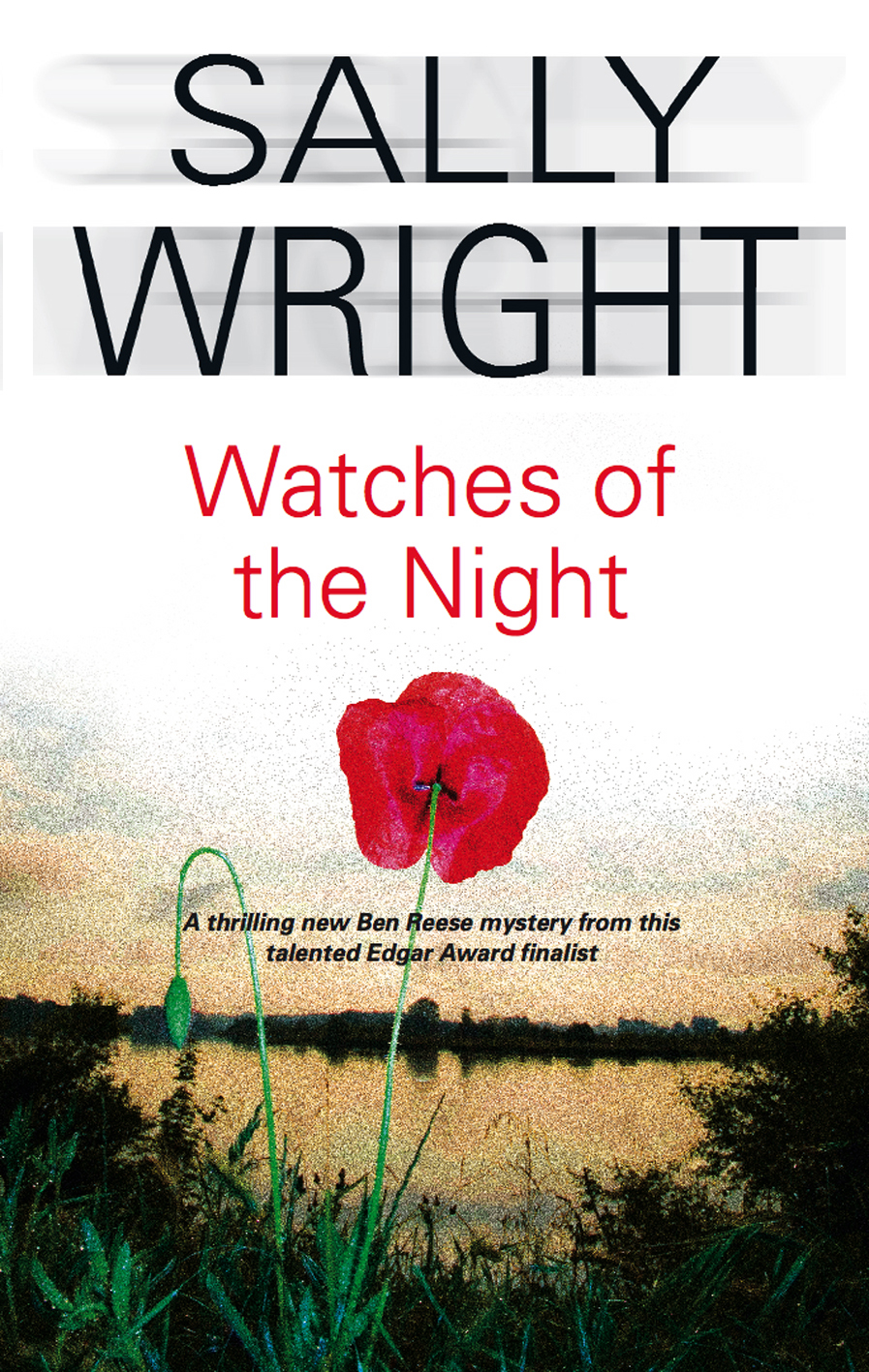 Reese Mysteries. The Watches of the Night is my favorite of the series— along with Code of Silence and, well, all the others— so I'm fascinated to read of the impact discovering the perfect setting in Tuscany had on her writing.
Over to you, Sally:
Settings get me started, and give me all kinds of story ideas, and then become as alive for me as the characters in my books.
The Ben Reese novels take place in the early 1960s, so there’s always a great deal of research that has to be done on site, especially since earlier historical periods often drive the plots.
When I wrote Watches Of The Night I’d been reading a lot about Tuscany, and I wanted to set the novel there so I could spend time in Florence and Siena and Cortona, and get out into the country too. I knew I could find a reason for Ben Reese to be there, since he’s an archivist in a university (based on a real life archivist who was a Scout for Army Intelligence in Europe in WWII). The artistic heritage of Italy would make it inevitable that Ben could do interesting work.
Yet, it wasn’t until I’d gotten to Florence and gone through several museums and churches that I was able to decide what work that would be. Ben ends up searching for a rare medieval book, while trying to return a stolen piece of renaissance jewelry taken off the body of a German soldier during WWII, as well as lecturing on paper restoration at a university conference.
I managed to fit parts of Scotland into Watches Of The Night as well - Leith Hall, the Dark Wood of Rannock, and the tiny, tiny village that claims to be the birth place of Pontius Pilate. I love those places, and wanted to use them as bones to shape the plot and give readers a chance to glimpse bits of Scotland they might never see on their own.
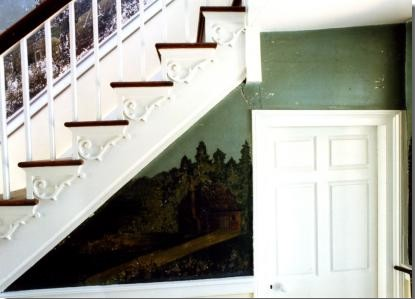 I also used settings I love around Lexington, where I show Ben restoring a pioneer mural in a real Kentucky farm house built in 1800.
But the denouement of Watches wouldn’t be anything like it is if I hadn’t stayed at Laconda dell’Amorosa on the west side of the Val de Chiana in Tuscany. It’s an ancient farming estate that’s been converted into an inn of great beauty and simplicity, though there are still wild boar in the woods and outbuildings on the very large property that haven’t been repaired and restored. 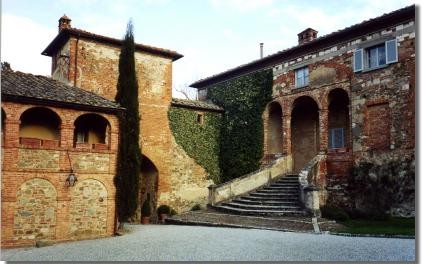
It was a dangerously dilapidated barn where peasant families once lived upstairs with livestock down below that gave me the perfect place for Ben to have to rescue a hostage and confront a murderer he’d been trying to track since the War.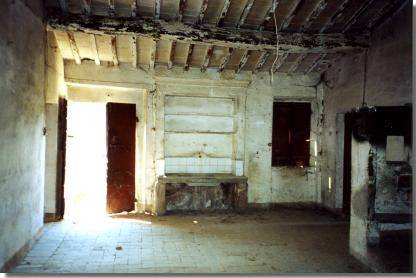
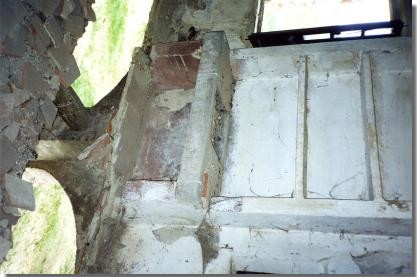
When I’m in a setting I connect with, I get a real physical rush of excitement, as I think, "This is it, yes. Here, somehow. How can I use this place?"
The story becomes the answer, and the process of working it out is one of the greatest pleasures of getting to write books.
 WWII-tech teams, the Venona Code, and more, to write her university-archivist-ex-WWII-Scout books about Ben Reese, who's based on a real person. Like most authors, Sally's been obsessed with books all her life and considers Jane Austen, C.S. Lewis and Dorothy L. Sayers among the ones that've influenced her most.
Donna Fletcher Crow, Novelist of British History, has written more than 50 books specializing in British Christianity. These books include: The Monastery Murders, clerical mysteries; Lord Danvers Investigates, Victorian true-crime; The Elizabeth and Richard series, literary suspense; and Glastonbury, The Novel of Christian England. She loves research and sharing you-are-there experiences with her readers.
Read More: Uncategorized
 Free personalized autographs available for print and ebooks!
Reader Comments:
Once again, welcome Sally and thank you for the great insight into how settings and plot interact in the process of writing.
-Donna, March 30, 2012
Ooh, I could imagine that being inspiring! I agree, setting or place at times give birth to plot, and more.
-jennymilch, March 30, 2012